Nullam dignissim, ante scelerisque the is euismod fermentum odio sem semper the is erat, a feugiat leo urna eget eros. Duis Aenean a imperdiet risus.
Nullam dignissim, ante scelerisque the is euismod fermentum odio sem semper the is erat, a feugiat leo urna eget eros. Duis Aenean a imperdiet risus.
 author
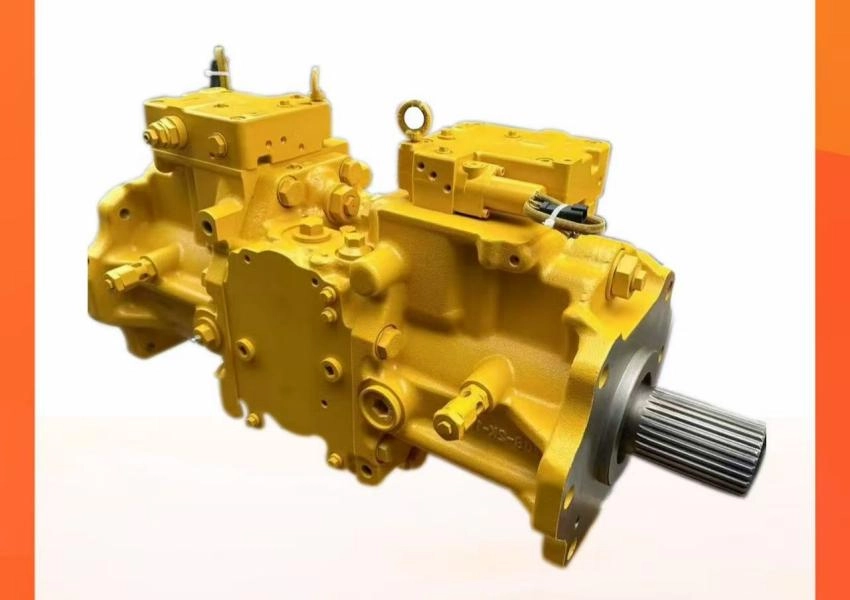
Hydraulic pumps are the core of every fluid power system, transforming mechanical energy into hydraulic energy to perform work efficiently.
The fundamental operation of a hydraulic pump involves converting mechanical input from a motor or engine into pressurized fluid flow. This process relies on controlled fluid displacement within sealed chambers, ensuring consistent flow under varying load conditions. The performance of a pump is determined by two key parameters—pressure and flow rate—which together define its power output and efficiency.
Pump efficiency depends on minimizing leakage and volumetric losses within the system. Flawless hydraulic performance starts with absolute precision. Our associated manufacturing lines utilize fully automated, multi-axis CNC machines to craft every internal pump component. By enforcing micron-level tolerance checks, we eliminate internal leakage and ensure friction-free rotation, delivering a pump that matches the durability of the original equipment. These processes guarantee that each unit maintains stable pressure delivery over extended operational cycles, even under extreme conditions.
In hydraulic circuits, pressure differentials drive fluid movement from low-pressure reservoirs to high-pressure zones where work is performed. Viscosity, temperature, and compressibility directly influence how efficiently this transfer occurs. When viscosity drops due to heat or contamination, internal leakage increases, reducing volumetric efficiency. Similarly, compressibility can cause a delay in response time during high-frequency operations.
The structural integrity of a hydraulic pump determines its ability to withstand high pressures while maintaining a long service life.
The housing of the hydraulic pump acts as a pressure vessel and as an alignment device for the rotating parts. This component must absorb high loads without deforming and also has to dissipate heat generated in operation. Critical for the durability of a hydraulic pump are shafts, bearings, and seals. Even a slight misalignment or excessive wear can result in severe damage to the entire pump or even in failure.
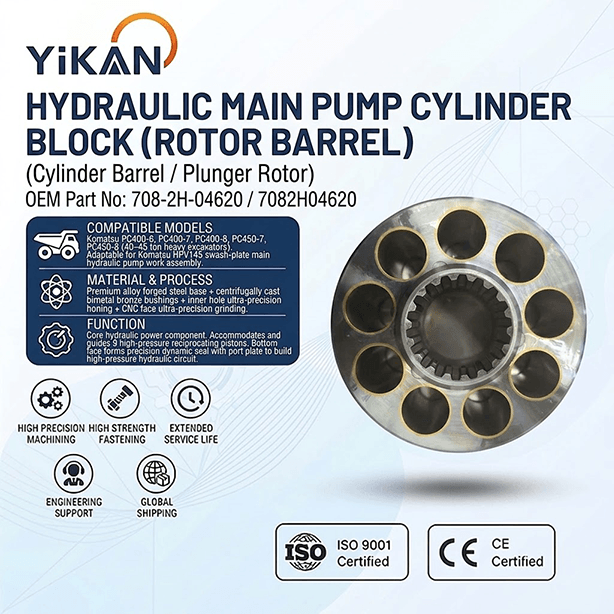
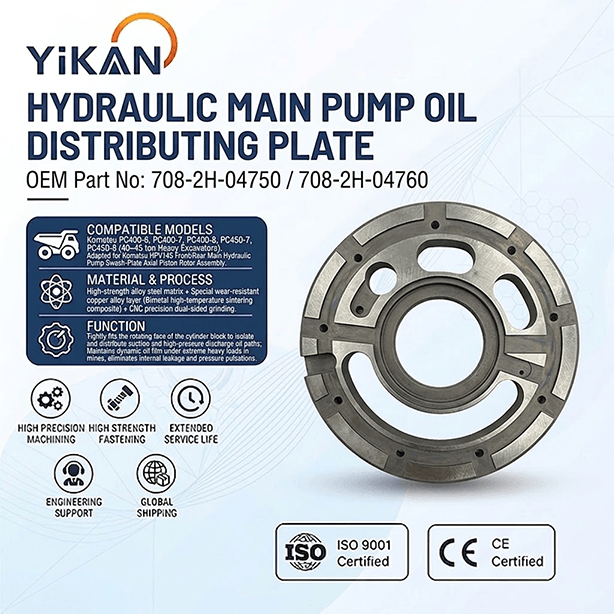
Before a hydraulic pump is delivered to the assembly line, the so-called core parts of the intermediate processed semi-finished parts, i.e., the cylinder block and the pistons as well as the valve plates, are subject to strict checks for faults. In the perfectly fitting housing the individual components are hermetically sealed and thus are ideal for use in the hydraulic pump.
Design parameters such as displacement volume, speed range, and maximum pressure rating determine how well a pump integrates with its target application. Internal clearances must be precisely balanced—too tight causes frictional losses, and too wide leads to leakage. We employ advanced CNC grinding technologies for plunger and barrel assemblies to maintain microscopic accuracy across thousands of cycles.
Noise reduction is another crucial factor in modern hydraulics. Through geometric optimization of flow channels and damping materials integrated into housings like those used in our WA380-6, vibration transmission is minimized without compromising performance.
Hydraulic pumps fall broadly into positive-displacement and non-positive-displacement categories depending on their fluid-handling mechanisms.
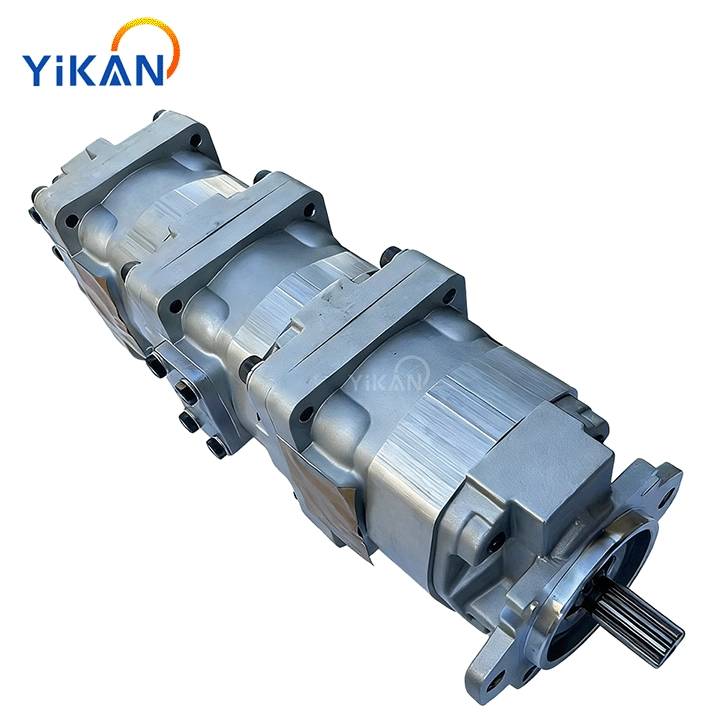
These pumps deliver a fixed volume per cycle regardless of discharge pressure variations.
Gear pumps use meshing gears to displace fluid mechanically between the gear tooth cavities. External gear designs provide simplicity and durability for moderate-pressure systems such as wheel loaders using units like the WA380-3 hydraulic gear pump. Manufactured with high-grade, wear-resistant gears and heavy-duty alloy housings to withstand the extreme operational stresses of continuous earthmoving.
Vane pumps use sliding vanes in an eccentric rotor cavity. These pumps are best for medium-pressure applications and for applications where smooth operation and low noise are required.
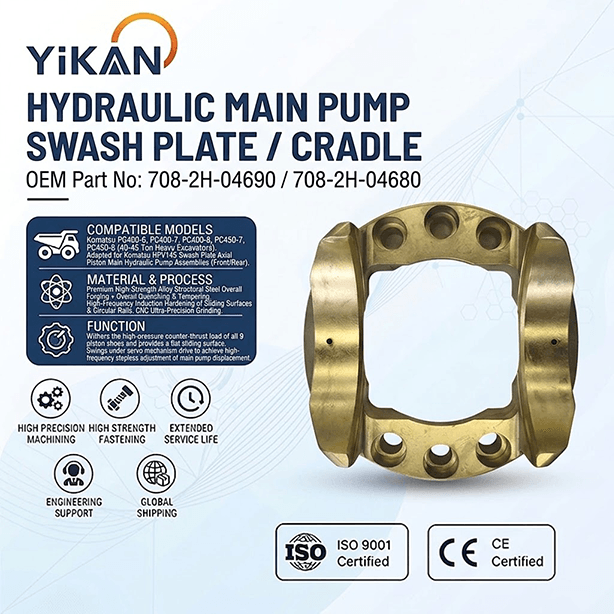
Piston pumps are often used in high-pressure applications that require precise flow control. Axial piston pumps with swash plates are the preferred choice for such applications. They can be fine-tuned to provide the exact amount of fluid flow required for the application by varying the displacement of the pump. This can be achieved without the requirement to change the speed of input to the pump and thus maintain efficient operation of the pump at all times.
Centrifugal designs convert kinetic energy from impellers into fluid motion without fixed displacement chambers. They are best suited for low-pressure yet high-flow scenarios such as cooling circuits or lubrication subsystems where minimal load variation exists.
Mechanical losses come from bearing friction, seal friction, and shaft misalignment. Volumetric loss occurs due to internal bypass or due to compression within a trapped oil pocket. And temperature has a great effect on the loss. Oil viscosity decreases as temperature increases, so leakage increases, whereas friction loss decreases. That is, leakage increases but friction loss decreases as temperature rises.
Our associated manufacturing lines utilize fully automated multi-axis CNC machines, eliminating internal leakage and ensuring friction-free rotation. This precision not only enhances volumetric efficiency but also extends wear life significantly under demanding field conditions.
Reliability enhancement begins with accurate machining followed by surface treatments that reduce friction coefficients on moving parts. Predictive maintenance systems using vibration analysis or oil condition monitoring can identify wear trends early before failure occurs.
We employ anti-corrosive coatings on all external surfaces combined with vacuum-sealed packaging during shipment as described. Every heavy-duty pump is thoroughly coated with industrial rust inhibitors, tightly vacuum-sealed, and securely bolted into an export-grade wooden crate. These measures protect product integrity throughout global logistics chains.
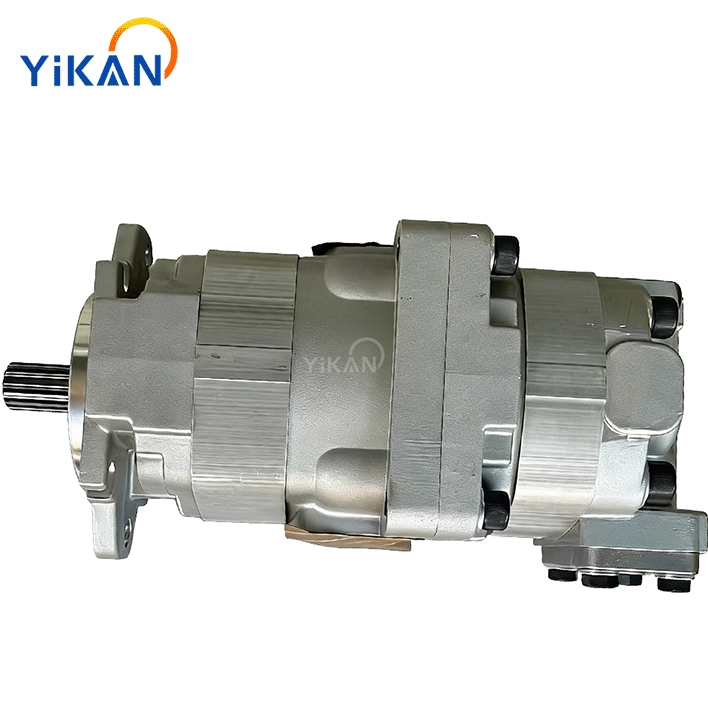
Control strategies influence how efficiently power is delivered relative to system demands.
Fixed-displacement pumps provide constant flow irrespective of pressure changes—ideal for simple circuits requiring predictable output—while variable-displacement types automatically adjust volume according to load-sensing feedback loops for improved energy savings across dynamic operations.
Our WA470-3 hydraulic gear pump exemplifies robust fixed-flow performance engineered specifically for heavy-duty wheel loaders operating under constant demand cycles where reliability outweighs modulation flexibility.
About YIKAN KOMSU
YIKAN KOMSU specializes in hydraulic solutions, including hydraulic pumps, motors, and valves, as well as complete hydraulic units and parts. With over 20 years of experience in the field of hydraulic engineering, our 3000 m² of automated production lines, as well as high-precision CNC machining down to 0.003 mm, allow us to provide our customers with hydraulic components that are on par with the OEMs and are available promptly. From castings to hydraulic assemblies, we maintain the highest degree of consistency throughout all of our product lines. We provide hydraulic fan pumps, hydraulic steering units, working units, as well as the main control and other types of hydraulic valves for excavators, bulldozers, wheel loaders, dump trucks, etc. Our R&D and production team can also support small-batch customization and process samples for hydraulic maintenance. This capability enables us to rapidly prototype new designs tailored precisely to client specifications while maintaining industrial-grade reliability standards.
Q1: What differentiates positive displacement from non–positive displacement pumps?
A1: Positive displacement models move fixed volumes per revolution regardless of output pressure, whereas non-positive types vary flow depending on resistance, making them suitable only for low-pressure circulation duties like cooling systems.
Q2: How does temperature affect hydraulic pump performance?
A2: High temperatures decrease oil viscosity, increasing internal leakage, yet reduce friction; hence, maintaining optimal thermal balance through proper cooling circuits ensures sustained volumetric efficiency across prolonged operations.
Q3: What maintenance practices extend pump lifespan?
A3: Implementing predictive diagnostics using vibration sensors combined with routine filtration checks prevents contamination-induced wear, ensuring continuous service reliability consistent with OEM-grade standards offered by YIKAN KOMSU’s advanced manufacturing framework.

封面图-ps压缩版、.png)