Nullam dignissim, ante scelerisque the is euismod fermentum odio sem semper the is erat, a feugiat leo urna eget eros. Duis Aenean a imperdiet risus.
Nullam dignissim, ante scelerisque the is euismod fermentum odio sem semper the is erat, a feugiat leo urna eget eros. Duis Aenean a imperdiet risus.
 author
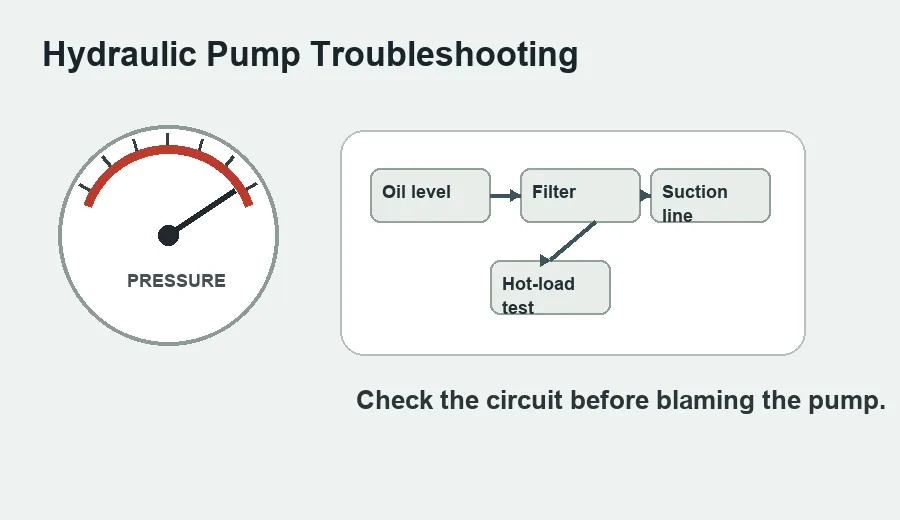
An excavator usually gives a warning before it gives up. The warning is rarely dramatic. More often, the boom slows a little, the bucket loses its punch in hard ground, the oil gets hot earlier than it should, and the operator starts working around the machine instead of trusting it.
That’s usually how an excavator hydraulic pump failure starts to show itself. Not every weak machine has a bad pump, of course. A clogged filter, a tired suction hose, air in the line, the wrong oil, or a drifting relief valve can all make a machine feel lazy. Still, when several symptoms show up together, the pump moves right to the front of the line.
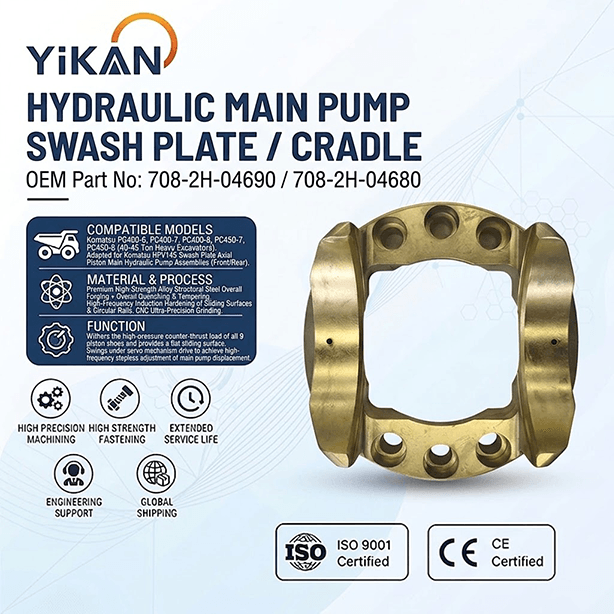
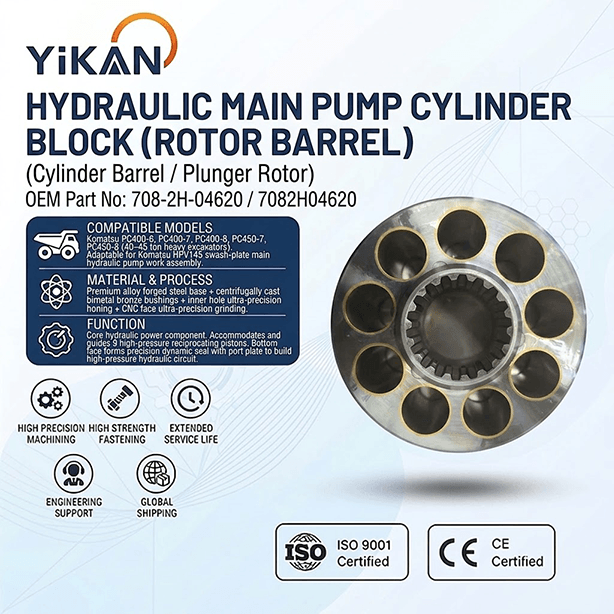
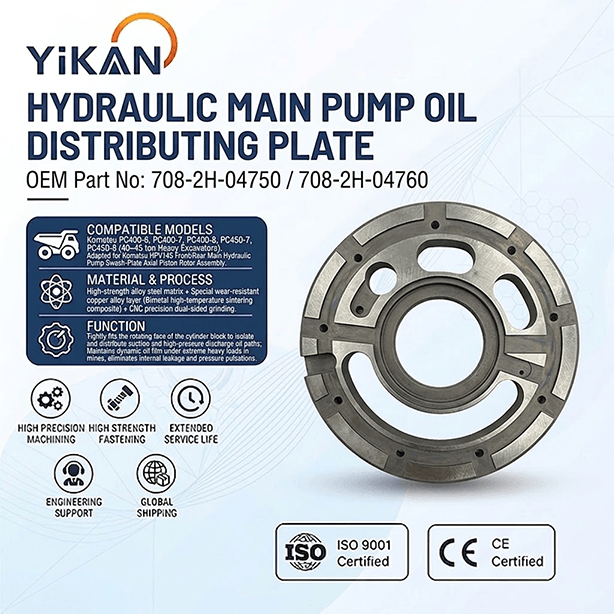
For buyers comparing replacement options, the YIKAN KOMSU is a useful place to start. It gives a quick view of the hydraulic parts side of the business without turning the job into guesswork.
A main pump does more than move oil. It decides whether the excavator can dig, swing, travel, and lift with confidence. Once output drops, the machine may still move at idle, then fall apart the moment the bucket bites into heavier material.
This is where hydraulic pump troubleshooting gets messy. The machine may look normal in the yard and still struggle on-site. A line that pulls air only when hot, a filter that starts to choke under load, or a valve that drifts after warm-up can all make the pump look guilty. So the first job is not to order parts. It is to separate a real pump problem from a system problem that just sounds similar.
The machine still works, but the rhythm changes. A healthy excavator has a smooth, familiar feel. When cycle time stretches out after warm-up, internal leakage may be cutting into output.
Light movement can look fine. Then the machine fades when the bucket hits resistance or the boom lifts a heavier load. That pattern is one of the clearest bad hydraulic pump symptoms on a job site.
A whining, growling, or rattling noise can point to cavitation, air entry, oil starvation, or worn internal surfaces. It doesn’t prove the pump is finished, but it does mean the machine needs attention.
Heat usually means wasted energy. If the oil temperature climbs early in the shift and the machine gets weaker as it warms up, the pump may be bypassing oil internally instead of turning it into working pressure.
One slow cylinder can be a local problem. Weak boom, arm, swing, and travel usually point closer to the pump, the oil supply, or the main pressure circuit.
During testing, a gauge that jumps, drifts, or falls away under load is a serious clue. A pump can still move oil and still fail to hold pressure where it should.
Shiny particles, dark oil, burnt smell, or repeated filter blockage suggest the problem has been going on for a while. At that point, excavator hydraulic pump replacement may be the safer call.
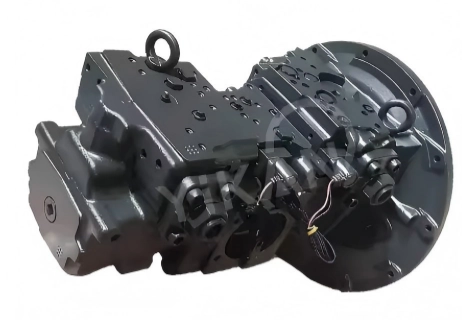
Start with the simple things. Oil level. Filter condition. Tank breather. Suction hose shape. Visible leaks. Oil color and smell. Those checks sound basic, but they catch a lot of false pump failures.
Then test the machine the way it actually works. If the report says the excavator loses hydraulic power only after 20 minutes of digging, an idle test won’t tell the whole story. Compare cold and hot readings. Compare light work and heavy work. A big drop after warm-up usually points to wear, leakage, or oil breakdown somewhere in the hydraulic circuit.
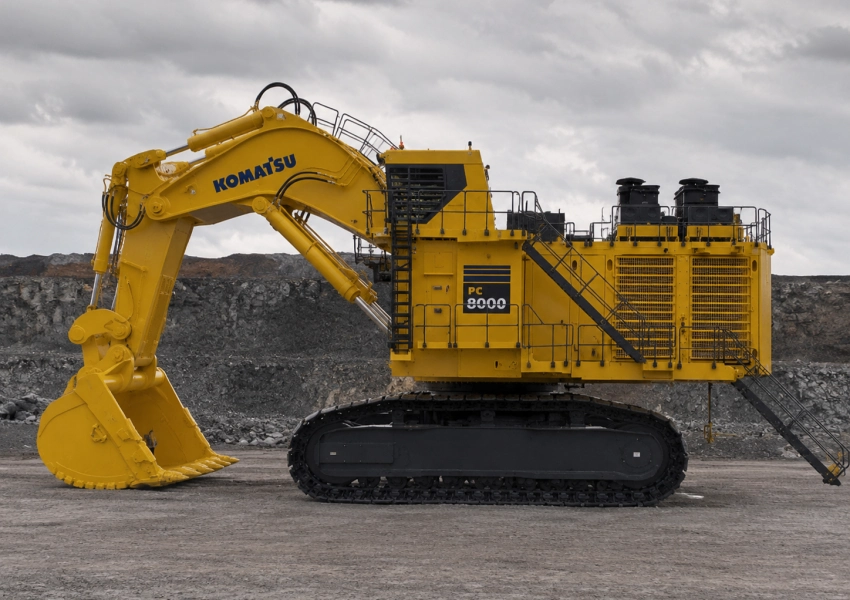
That is also where a model reference helps. A large machine such as a PC650-8 hydraulic pump is not the place to be casual. Heavy-duty excavators need pump output that holds up under long shifts, not just a part that looks close in a listing.
While repair is still an option if the wear is limited and the housing is clean, a remanufactured unit can also be offered if the original part is no longer available. The customer can’t wait for the part, and a replacement is offered at a cost that the customer wants to keep under control without taking any risks.
Replacement becomes the safer option when the pump has developed deep scoring in the casing, the housing is cracked, there have been repeated instances of overheating, there is heavy internal leakage, or there is metal debris present that keeps coming back. A cheap repair can become expensive in the end, very expensive.The machine may leave the shop, work for a few days, and come back with the same complaint plus more damage. If metal is already showing up in the oil, there is no neat shortcut.
The hydraulic pump category is useful here because it lets buyers compare the pump family first, then move into model and part-number matching without jumping too fast.
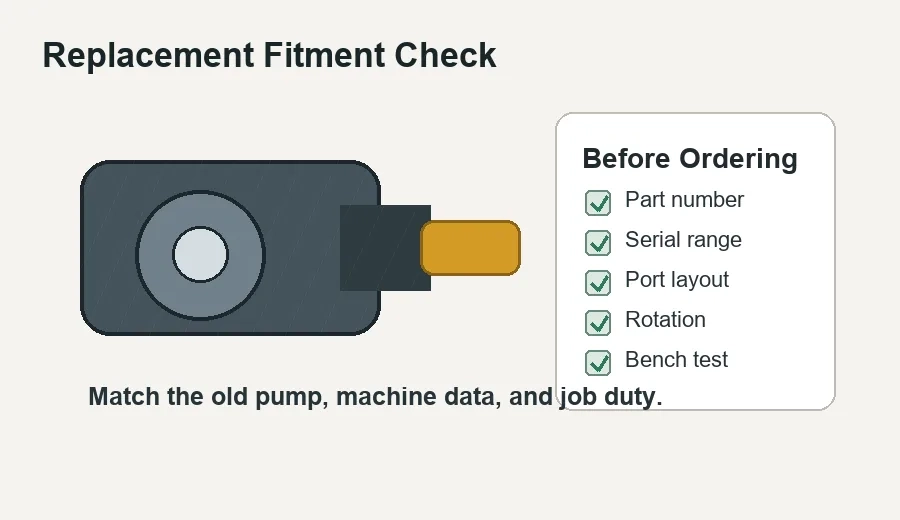
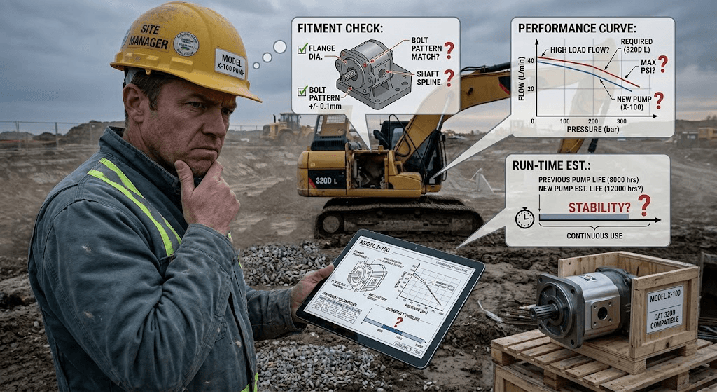
Do not order from the excavator model alone. Photos help, but they do not solve everything. Nameplate details and port positions matter more than a quick visual match. This is especially true when the old pump has been replaced before or when the same excavator model was built with more than one hydraulic setup.
For smaller excavator applications, the hydraulic pump PC200-8 is a good example of the kind of page buyers should expect. It gives a more exact reference than a generic “fits this model” note, which is rarely enough on its own.
YIKAN KOMSU works with hydraulic pumps, fan pumps, working pumps, rotary pumps, control valves, rotary motors, and walking motors for construction machinery. The team has more than 20 years of hydraulic maintenance experience, a 3,000-square-meter automated factory, CNC machining capability down to +/-0.003 mm, and hands-on experience with inspection, repair, and remanufacturing of excavator hydraulic components. YIKAN KOMSU specializes in manufacturing aftermarket hydraulic parts compatible with Komatsu machinery, including hydraulic pumps, motors, control valves, and related components. Our products are developed as reliable alternatives to original Komatsu machinery parts, helping customers reduce maintenance costs while maintaining equipment performance.
That matters when the buyer needs more than a price. A repair shop may need fitment guidance. A fleet buyer may need a quick sample check. A parts dealer may need a small batch that doesn’t fit a standard catalog order. In those cases, the hydraulic component service support page is usually a better starting point than a broad inquiry.
The practical side is simple. If a machine is losing power, the supplier should be able to help compare the old pump, the machine data, and the working condition before anything ships. That’s the part that stops a bad purchase from becoming a second repair. We covered the technical background separately in this text.
Q1: Can bad hydraulic pump symptoms come from other parts too?
A1: Yes. Filters, suction lines, relief valves, oil condition, cylinders, and control valves can all create similar symptoms. Pressure, flow, heat, and contamination should be checked together.
Q2: When is an excavator hydraulic pump replacement better than a repair?
A2: Replacement is usually safer when the housing is cracked, the wear is deep, metal keeps returning, or the machine can’t afford another shutdown after a short repair.
Q3: What helps a supplier match the right pump faster?
A3: Send the original part number, machine model, serial number, nameplate photo, port layout, rotation direction, pump photos, and a short note on the failure pattern.
封面图-ps压缩版、.png)