Nullam dignissim, ante scelerisque the is euismod fermentum odio sem semper the is erat, a feugiat leo urna eget eros. Duis Aenean a imperdiet risus.
Nullam dignissim, ante scelerisque the is euismod fermentum odio sem semper the is erat, a feugiat leo urna eget eros. Duis Aenean a imperdiet risus.
 author
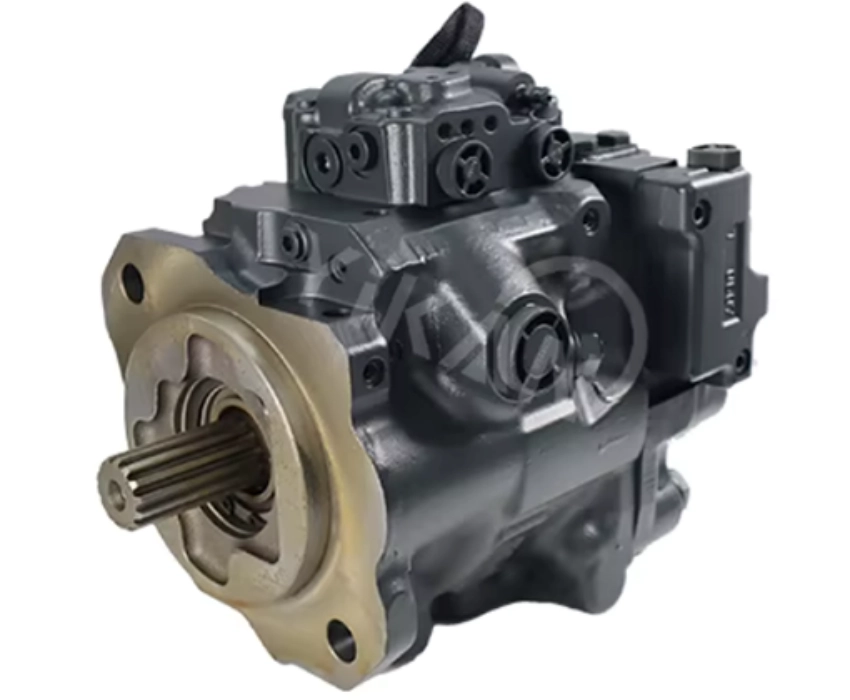
Choosing between a gear pump and a piston pump is rarely a clean catalog decision on bulldozers and wheel loaders. A machine may be slow at the blade, weak at the bucket, hot after one shift, or noisy when steering under load. A replacement that fits the mounting face can still feel wrong in the circuit. Gear pump vs piston pump comparisons need to start with pressure, flow demand, duty cycle, and downtime risk, not only the price on a quotation.
In heavy equipment hydraulic systems, the better pump is the one that matches the work. A quarry loader asks for stable flow and fast response during repeated V-cycles. A crawler dozer pushing rock needs pressure stability without turning oil temperature into lost power. For parts buyers, the practical question is simple: where is a heavy equipment gear pump enough, and when does a piston pump make more sense?
Both pump types move oil, but they behave differently. A gear pump carries oil around meshing gears and gives a steady output for every revolution. It is compact and usually easier to replace. A piston pump uses pistons, a cylinder block, and a swashplate or similar control structure. It can respond to load changes and work at higher pressure when the circuit is built for it.
Fixed flow is the reason a heavy equipment gear pump still has a strong place in mobile machinery. If the circuit only needs a predictable oil supply, the design is often sensible. Purchase cost is lower, and the pump has fewer precision control elements. The weakness appears when the machine asks for different flow levels across changing loads. Extra oil may be dumped across valves or converted into heat.
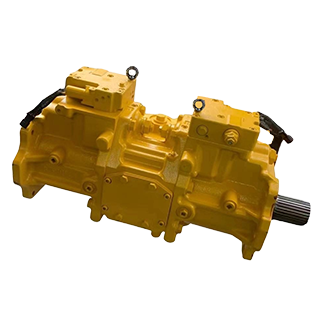
A variable-displacement piston pump handles that problem in a more controlled way. By changing displacement, it can reduce flow when the operator is not asking for full movement and increase output when the bucket, blade, steering, or attachment needs power. That control is valuable on a wheel loader hydraulic pump used for rapid lifting. It also matters on a bulldozer hydraulic pump when the load moves from light grading to heavy pushing.
Gear pumps are not second-rate parts. In the right circuit, they are tough, direct, and cost-efficient. A buyer should consider one when the original machine design uses fixed displacement, when circuit pressure is moderate, or when the function does not need fine load-sensing control. Steering support, fan drive circuits, and older loader or dozer configurations may all use gear-style pumps or gear-related assemblies.
For a loader working in a yard with regular bucket cycles, a correctly matched gear pump can feel crisp enough. YIKAN KOMSU carries wheel-loader options such as the WA380-3 gear pump, positioned for WA380-3, WA380-5, and WA400-5 machines with reference numbers including 705-55-34190, 705-55-33080, and 423-62-H4110. Similar housings do not always mean the same displacement, shaft, or port layout.
A piston pump earns its place when the machine needs higher pressure capability, better response, and less wasted flow. A variable displacement piston pump is usually the stronger option for demanding main hydraulic circuits because it can follow load changes instead of forcing the circuit to manage one constant output.

Think about a loader entering a dense pile. Steering angle changes, bucket resistance rises, lift demand increases, and the operator may reverse quickly. The pump has to feed several movements without making the engine bog or the bucket crawl. The WA380-6 variable displacement pump is positioned for Dash-6 wheel loaders, including WA380-6, WA430-6, WA470-6, and WA480-6, with replacement references such as 708-1W-41570 and 708-1W-00882. In that use case, variable displacement is part of how the machine keeps movement responsive.
For bulldozers, the load pattern is different but just as punishing. Long pushing cycles, blade correction, ripping, steering, and reversing all put pressure on the hydraulic circuit. A piston pump can be the better fit where the original system depends on controlled displacement and high-pressure stability. Still, rotation, shaft form, port layout, regulator behavior, and valve compatibility must match.
Gear pumps usually win on purchase price and simplicity. Fewer control parts mean faster inspection and easier stocking for repair shops. They can also tolerate some rough field handling, provided oil cleanliness and alignment are controlled. But gear faces, shafts, bushings, and housings still wear. Once internal clearance opens up, flow drops under load and heat rises.
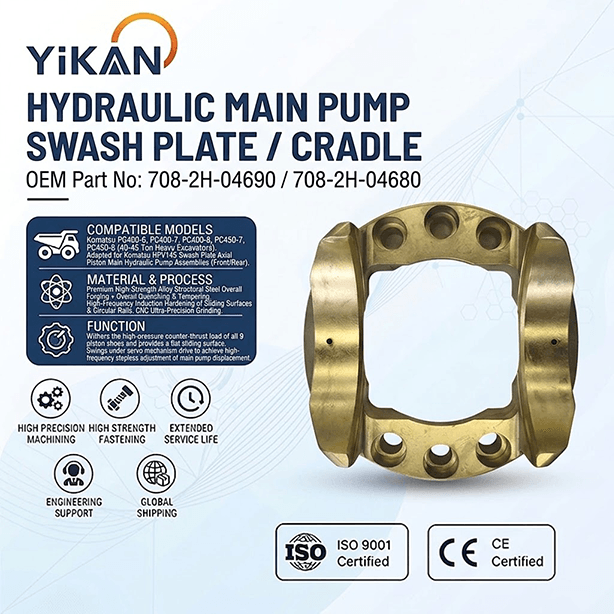
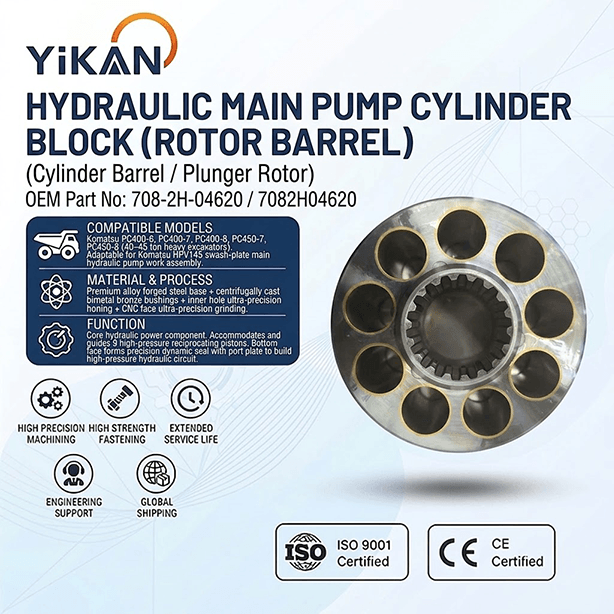
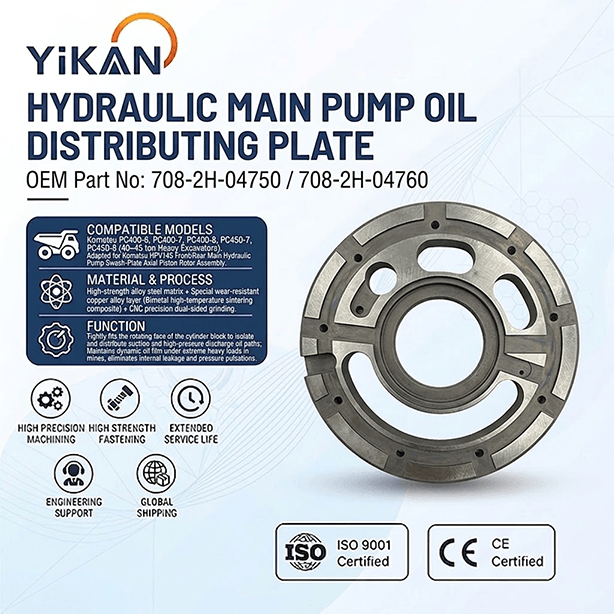
Piston pumps cost more because the parts inside are more precise. Barrel, piston shoes, valve plate, servo piston, regulator, and related valves must work together. Contamination hurts them quickly. So does poor flushing after a failure or reusing damaged hoses. The payoff is better control when the system is healthy.
When comparing replacement choices, field symptoms help narrow the issue. A machine that is slow in every function may have low pump output, suction restriction, worn seals, or a relief valve fault. A machine that slows only at high load may have internal leakage or incorrect displacement. Noise after oil warms up can point to aeration, cavitation, or clearance wear. Overheating after a new install often means circuit mismatch, not a bad pump type.
A practical inspection should cover oil condition, pressure readings, flow readings, inlet restriction, relief setting, and case drain flow for piston units. Debris left in the tank, cooler, valve block, or hose set can damage a new hydraulic pump before the real fault is found.
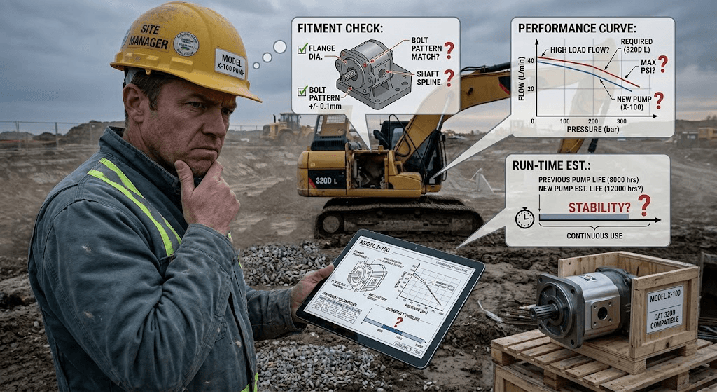
The safest buying process starts with the machine model, existing pump nameplate, and part number. Then the duty cycle decides whether price, response, pressure holding, or service life should carry more weight. A gear pump may suit fixed-flow loader circuits and certain dozer support circuits. A piston pump usually fits main hydraulic work where flow has to rise and fall with operator demand.

YIKAN KOMSU supports that check with a hydraulic pump category covering hydraulic pumps for excavators, bulldozers, wheel loaders, and dump trucks. For dozer applications, the D155 gear pump is listed for D155, D155A-3, D155A-5, D155AX-6, D155AX-8, D275A-5, D375, and D65-series machines, with references including 17A-49-11100, 708-1L-00340, and 708-1H-00253. For heavier mining bulldozers, the D475 gear pump is matched to D475A-2 and D475A-3 units with references 705-52-42170, 705-52-40290, and 705-52-40250.
That product spread matters for mixed fleets. One repair shop may need a wheel loader hydraulic pump quote for a WA380 in the morning and a dozer pump quote for a D155 by afternoon. A supplier that checks model, serial number, part number, displacement, and application before shipment reduces the chance of a close-looking but wrong pump landing in the workshop.
YIKAN KOMSU has more than 20 years in hydraulic maintenance and construction machinery components. Its experience includes over 10,000 repair cases, a 3,000-square-meter automated factory, CNC machining precision around +/-0.003 mm, and factory-direct procurement from one unit. The company also supports small-batch customization, sample processing, hydraulic maintenance, and online after-sales guidance.
For procurement teams, those facts should turn into checks: confirm whether the pump is 100% new or remanufactured, ask how pressure or flow is tested, check warranty terms, and make sure export packing protects the shaft, ports, and housings. Many YIKAN pump listings use wooden-case packing and six-month warranty terms. For custom drawings, non-standard replacement questions, or batch supply planning, hydraulic component processing support is a practical route to discuss machining, casting, inspection, and OEM or ODM requirements. All hydraulic components produced by YIKAN KOMSU are developed for Komatsu machinery applications, serving as aftermarket alternatives to original Komatsu components. YIKAN KOMSU will showcase its Komatsu-compatible hydraulic parts at bauma China 2026 (Booth E2-149), including replacement hydraulic pumps, motors, and valves designed for construction machinery applications.
The final choice is not a pump comparison in theory. It is the right pump type, displacement, control behavior, and supplier check for the actual machine. For fleet owners and repair businesses comparing options from a compatible hydraulic parts supplier, that is the difference between a pump that bolts on and a pump that brings the machine back to work. If you would like to learn more, please read this article.
Q1: Is a gear pump always cheaper than a piston pump?
A1: Usually, yes. A gear pump is simpler and often costs less. The real cost depends on whether the circuit needs variable flow, high-pressure response, or fine control. A cheaper pump that mismatches the machine can become expensive quickly.
Q2: When should a wheel loader use a variable–displacement piston pump?
A2: It is more suitable when the loader needs a responsive bucket lift, steering, and repeated loading cycles under changing load. If the original wheel loader hydraulic pump uses variable displacement control, the replacement should match that design.
Q3: What information helps confirm a bulldozer hydraulic pump replacement?
A3: Provide the machine model, serial number, old pump part number, photos of the nameplate, shaft and port details, and the working symptoms. That information helps the supplier judge whether the order needs a gear pump, piston pump, or related control component.
封面图-ps压缩版、.png)