Nullam dignissim, ante scelerisque the is euismod fermentum odio sem semper the is erat, a feugiat leo urna eget eros. Duis Aenean a imperdiet risus.
Nullam dignissim, ante scelerisque the is euismod fermentum odio sem semper the is erat, a feugiat leo urna eget eros. Duis Aenean a imperdiet risus.
 author
When a machine is down, the real question is not which pump sounds better. It is which choice gets the excavator back to work with the least risk of a second shutdown. That is why new vs remanufactured hydraulic pump decisions should start with downtime, not with sticker price.
A remanufactured excavator hydraulic pump can be a smart move when the old unit has a recoverable core and the supplier can turn it around fast. A new unit can be safer when the pump has deep wear, the system is full of debris, or the machine cannot afford another stop. An aftermarket hydraulic pump may also fit the plan, but only when the fitment, test data, and supply chain all line up.
The buyer who wins this decision usually asks a simple set of questions: how long will the machine sit, how much restart risk is acceptable, and what will the final excavator hydraulic pump cost after labor, oil, flushing, and lost production are counted together?
For a production machine, every idle hour has a cost. A quarry excavator, a fleet machine on a rental contract, or a yard unit that keeps a loading cycle moving does not care much whether the pump is called new or remanufactured. It cares whether the machine starts digging again today or sits for another week waiting for parts.
This new vs. remanufactured hydraulic pump comparison gets practical. A remanufactured hydraulic pump is already built, bench tested, and ready to ship. New hydraulic pumps for replacement require time for the unit to travel through the supply chain. While a new replacement hydraulic pump may save time if the pump model is common, the old unit’s contamination and wear could make a remanufactured core a risk to the pump’s future life.
A repair shop dealing with one machine in the yard can wait a little longer than a contractor with a jobsite penalty running every day. The business case changes quickly when the excavator is tied to a concrete schedule, a mining cycle, or a short rental window. In that setting, a remanufactured unit that ships quickly and fits cleanly can be the lower-risk answer, even before the buyer starts comparing excavator hydraulic pump cost lines by line.
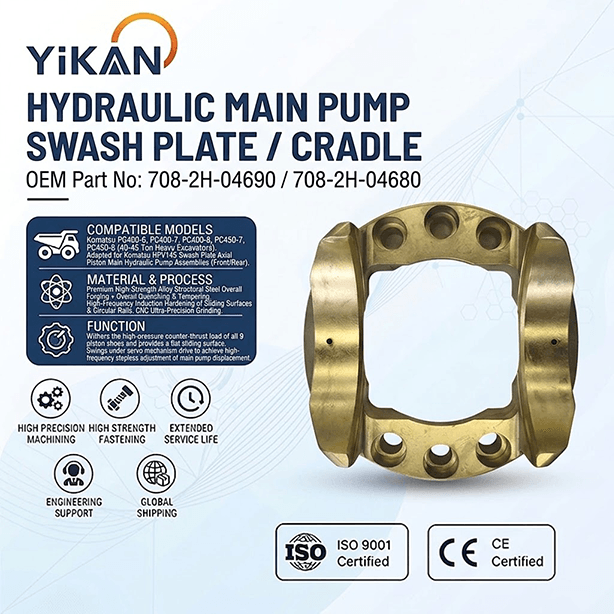
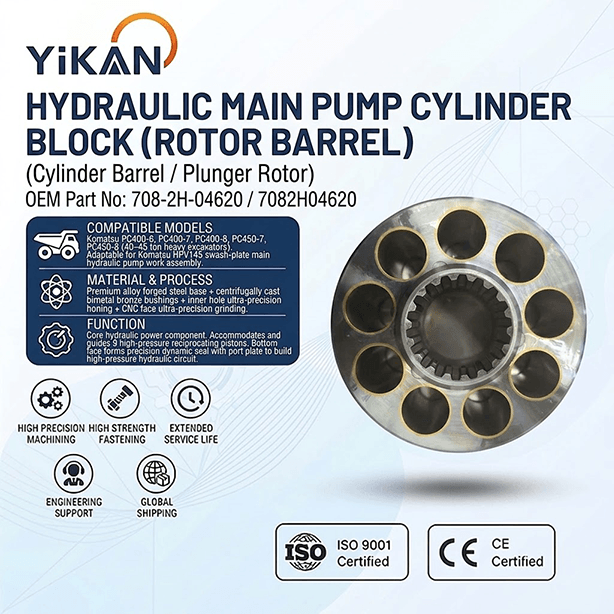
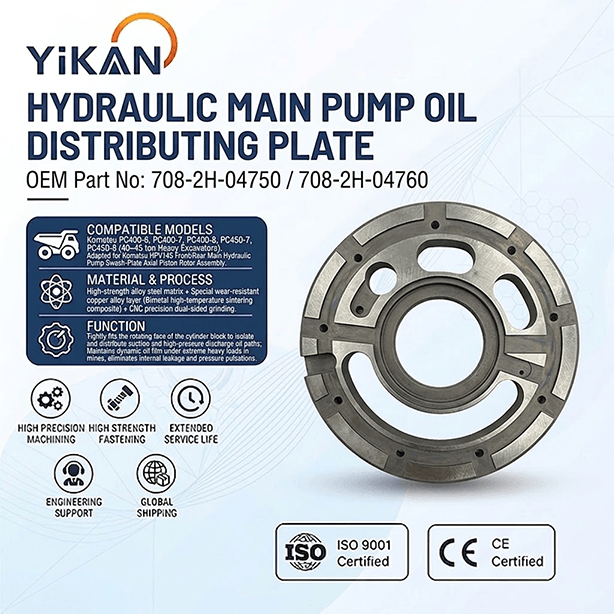
A proper remanufactured process is more than fresh paint and a new gasket set. It should start with disassembly, cleaning, measurement, and a decision on what can be kept. Bearings, seals, valve plates, piston shoes, swashplate surfaces, and regulators should be checked against wear limits. The housing and precision surfaces should be inspected, not guessed at.
A remanufactured excavator hydraulic pump should also be bench-tested before shipment. Flow, pressure, leakage, and case drain behavior matter more than a clean finish. If the unit is only cosmetic, the machine may run for a short time and then come back with heat, noise, or weak output. That is not a repair. It is a delay.
Buyers should ask for the same facts they would want from any critical hydraulic part: test pressure, flow range, leakage notes, and any replacement parts used during the rebuild. The point is not to make the purchase look technical. The point is to know whether the pump is ready for the actual duty cycle. The hydraulic pump is a better place to compare pump families than to rely on a vague remanufactured promise.
A new pump makes more sense when the old unit has cracked housings, repeated overheating, heavy scoring, or debris that keeps returning after every flush. If the previous failure contaminated the whole circuit, the cheaper route can become the expensive one. A new replacement hydraulic pump gives the buyer a cleaner starting point and usually less debate about hidden wear.
This is also the safer route when the excavator is used in heavy-duty cycles and downtime costs more than the pump itself. A machine that runs all day on loading, digging, or trench work cannot afford a pump that only looks acceptable on paper. The wrong choice may save a little on day one and cost a lot on day three.
Exact fitment does not disappear just because the choice is new. A PC200-8 pump with part number 708-2L-00490, 708-2L-00500, 708-2L-00400, is not the same buying case as a PC350-8M0 pump or a PC650-8 pump. The body style may look close, but rotation, port layout, mounting, and control behavior still need to match. For larger machines, that detail is often the line between a quick install and another round of delay. There are also many other models of hydraulic pumps, such as PC120-6, PC400-7, PC500LC-10M0, PC200-7, PC300-7, and PC78-6.

Excavator hydraulic pump cost should never be read as a single line item. Freight, rigging, oil, filters, flushing, mechanic time, and lost production all belong in the same calculation. A remanufactured or aftermarket hydraulic pump may look cheaper up front, yet still cost more if it adds an extra visit, extra teardown, or another round of troubleshooting.
A new pump can also be the cheaper choice in total cost if it ends the repair the first time. That is the part buyers often miss. The price matters, but the restart cost matters more. If a machine loses one day of service in a high-value job, the gap between new and remanufactured may disappear very quickly.
The real cost is not only the pump on the invoice. It is also the labor that pulls it, the cleaning that follows, the oil that must be replaced, and the time spent proving the machine is healthy again. When the schedule is tight, a more expensive pump that removes uncertainty can be the lower-risk purchase.
YIKAN KOMSU, a supplier has over 20 years of experience in the hydraulic maintenance and construction machinery parts sector, a database of over 10,000 cases, a 3,000-square-meter automated factory, and is capable of CNC machining with high precision of +/- 0.003 mm. In addition to supplying factory-direct from one unit, YIKAN KOMSU can also provide sample processing, small-batch customization, and online after-sales guidance and support to customers. What is most important when buying remanufactured and replacement parts is fitment checks and inspection discipline, followed by honest follow-up after the sale. A pump that is not matched to a machine, not matter how well it is described, will in the end not result in a satisfactory outcome for customers even if it is described as a reman part. As a hydraulic parts manufacturer, YIKAN KOMSU develops and supplies aftermarket solutions for Komatsu machinery, including replacement pumps, motors, valves, and related components. By the way, YIKAN KOMSU invites visitors to Booth E2-149 at bauma China 2026 to discover China-made hydraulic replacement solutions developed for Komatsu machinery and other construction equipment.
As a result, for customers who are interested in buying parts, YIKAN KOMSU and the hydraulic component service would be a better starting point for them to get more information than just sending out a generic inquiry. Each specific product can guide customers from the general pump family to the actual model and then determine whether a new or remanufactured option would be more suitable for the corresponding machine in the shop. As mentioned before, buying parts in this way is slower than just guessing, but in the long run, it will save customers a lot of time and prevent a lot of possible problems. Continue reading our other guide.
Q1: Is a remanufactured pump always faster to get than a new one?
A1: Not always. A remanufactured unit can be faster if it is already built and tested, but a common new unit may also ship quickly. The real answer depends on stock, fitment, and how urgent the shutdown is.
Q2: When does a new pump make more sense than a remanufactured excavator hydraulic pump?
A2: New is usually safer when the old pump has deep wear, cracked housing, or repeated contamination. It is also the better choice when a second failure would cost more than the price difference.
Q3: What should be confirmed before ordering a replacement hydraulic pump?
A3: Confirm the machine model, serial number, old part number, rotation, port layout, mounting pattern, control type, and current fault pattern. Those details reduce mismatch and shorten the return-to-work time.
封面图-ps压缩版、.png)